
The Residency
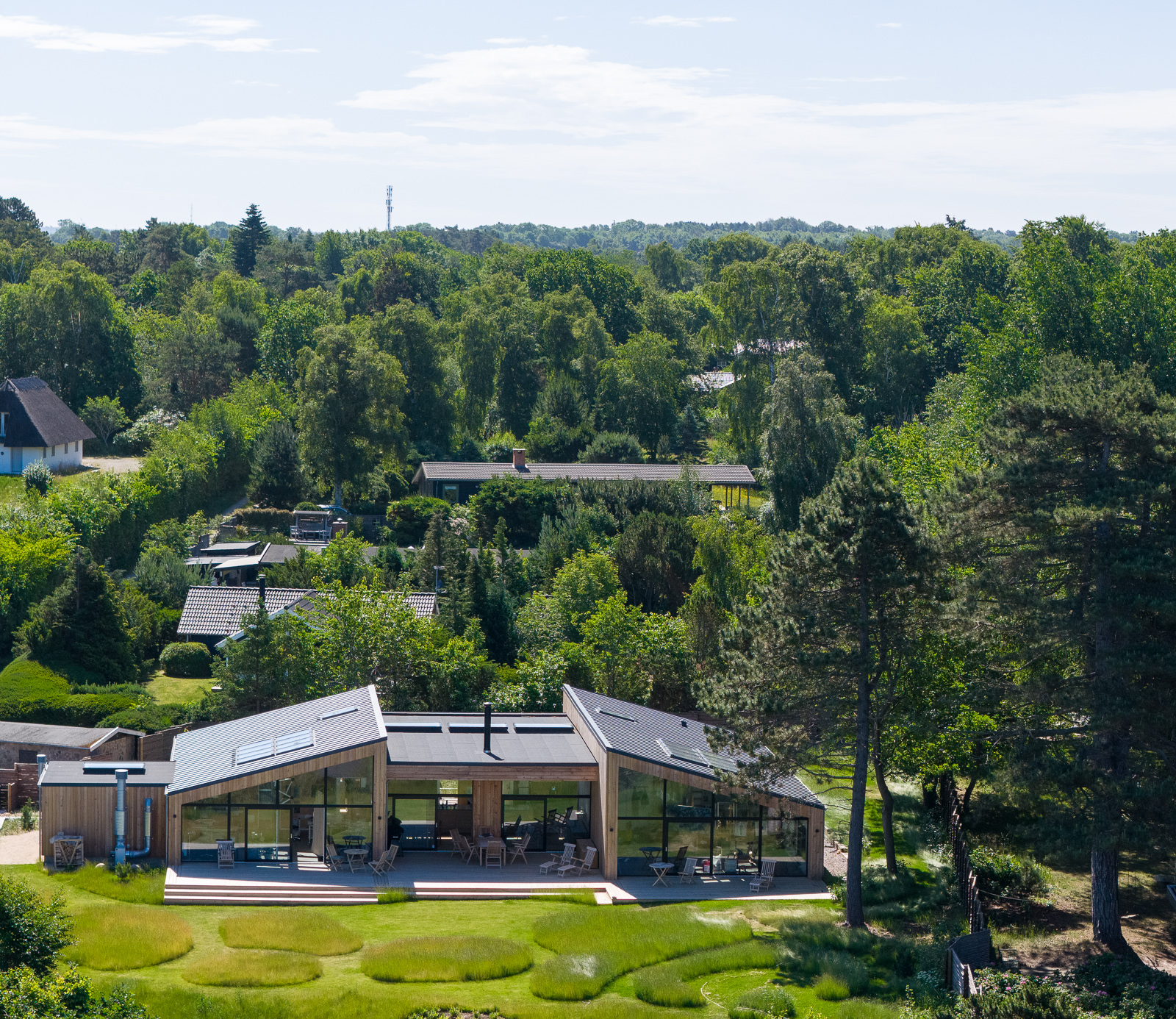
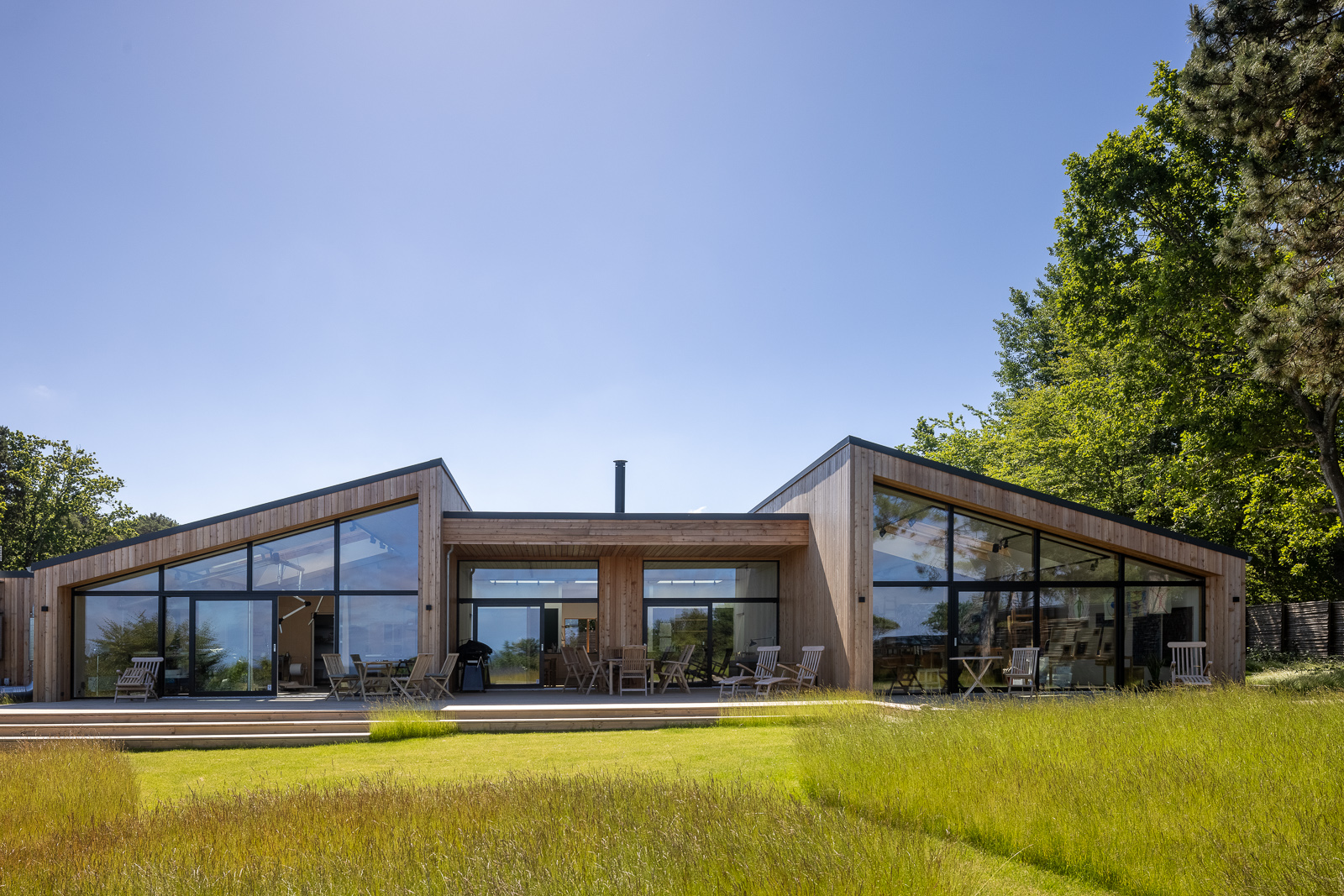
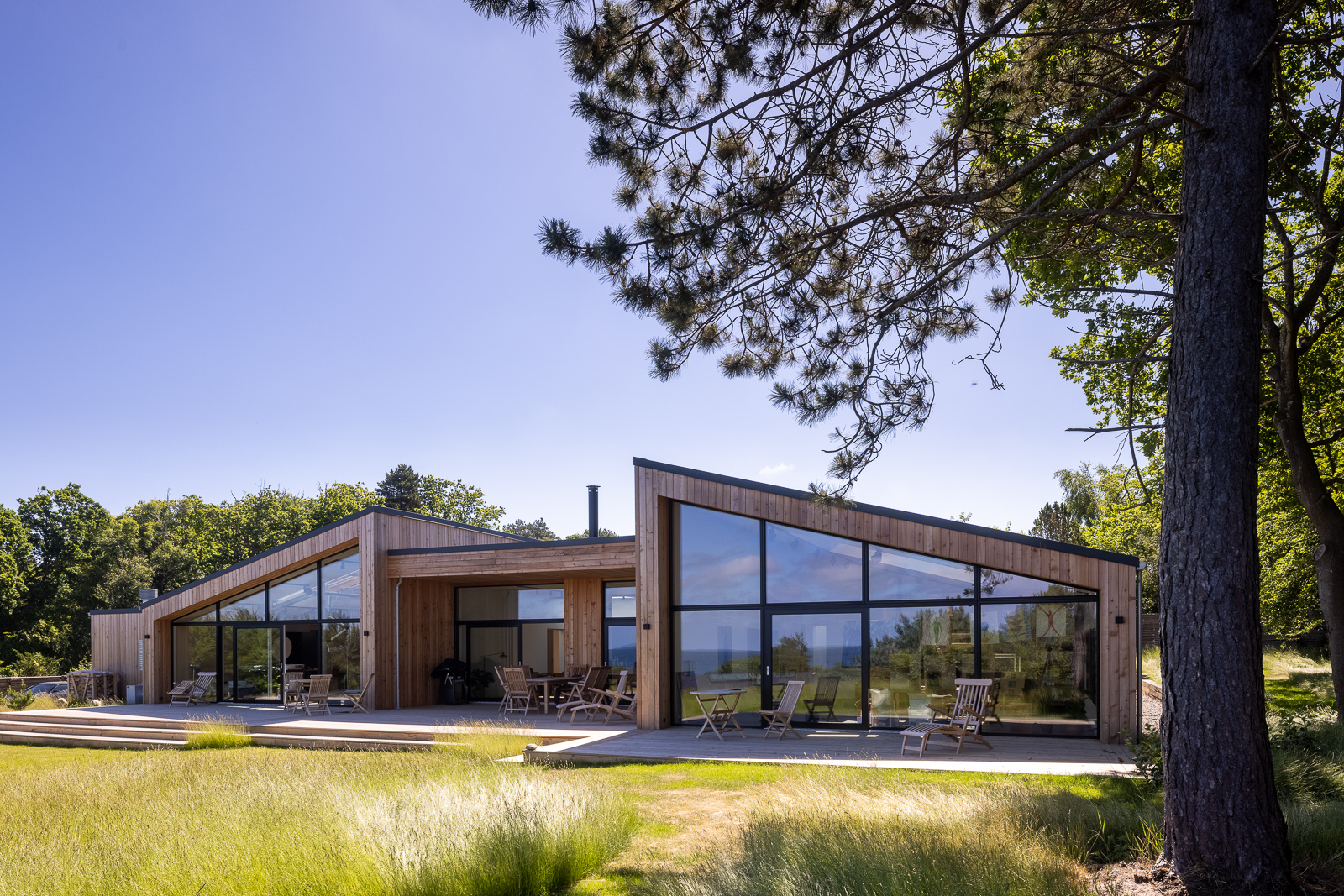
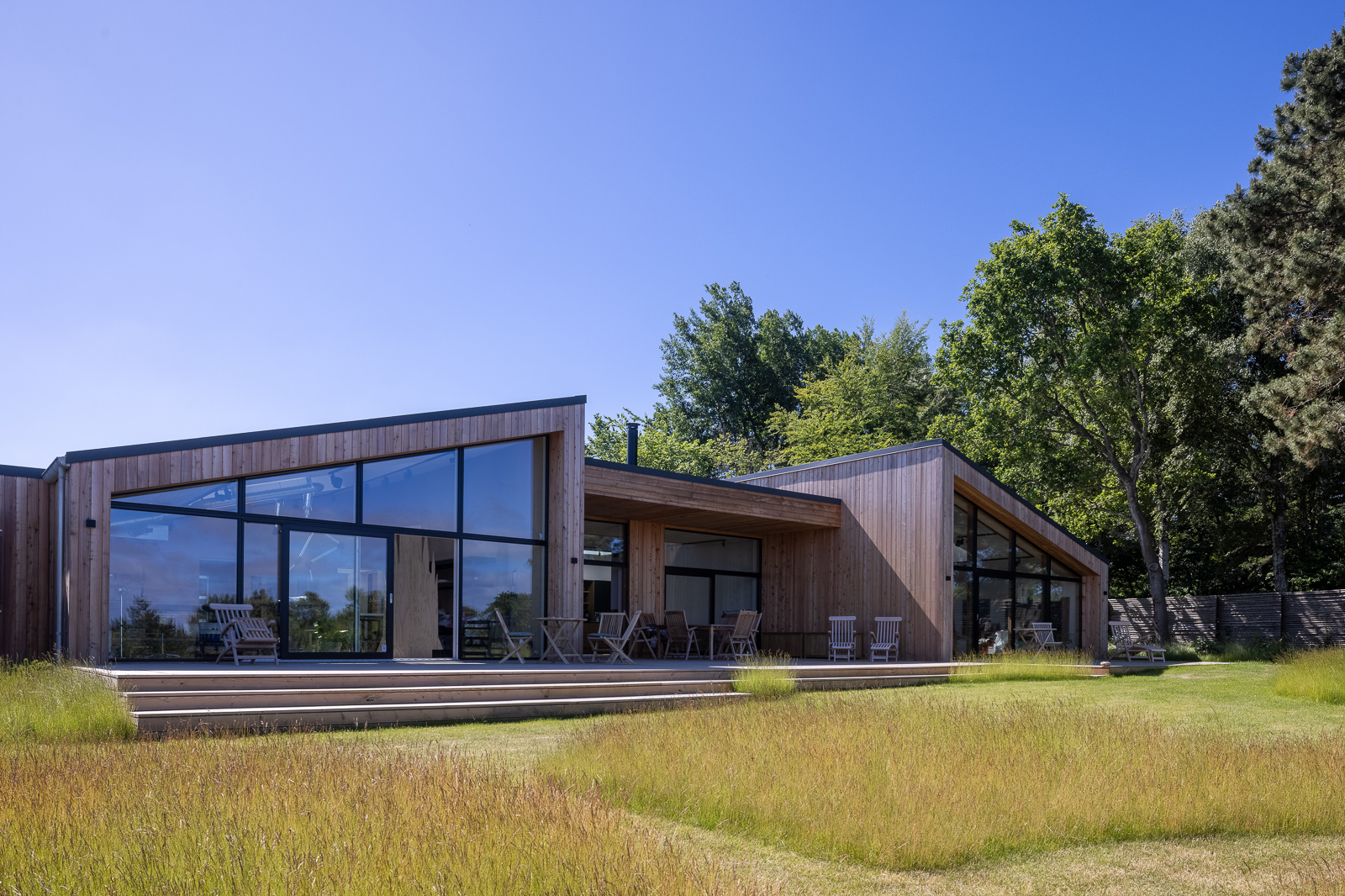
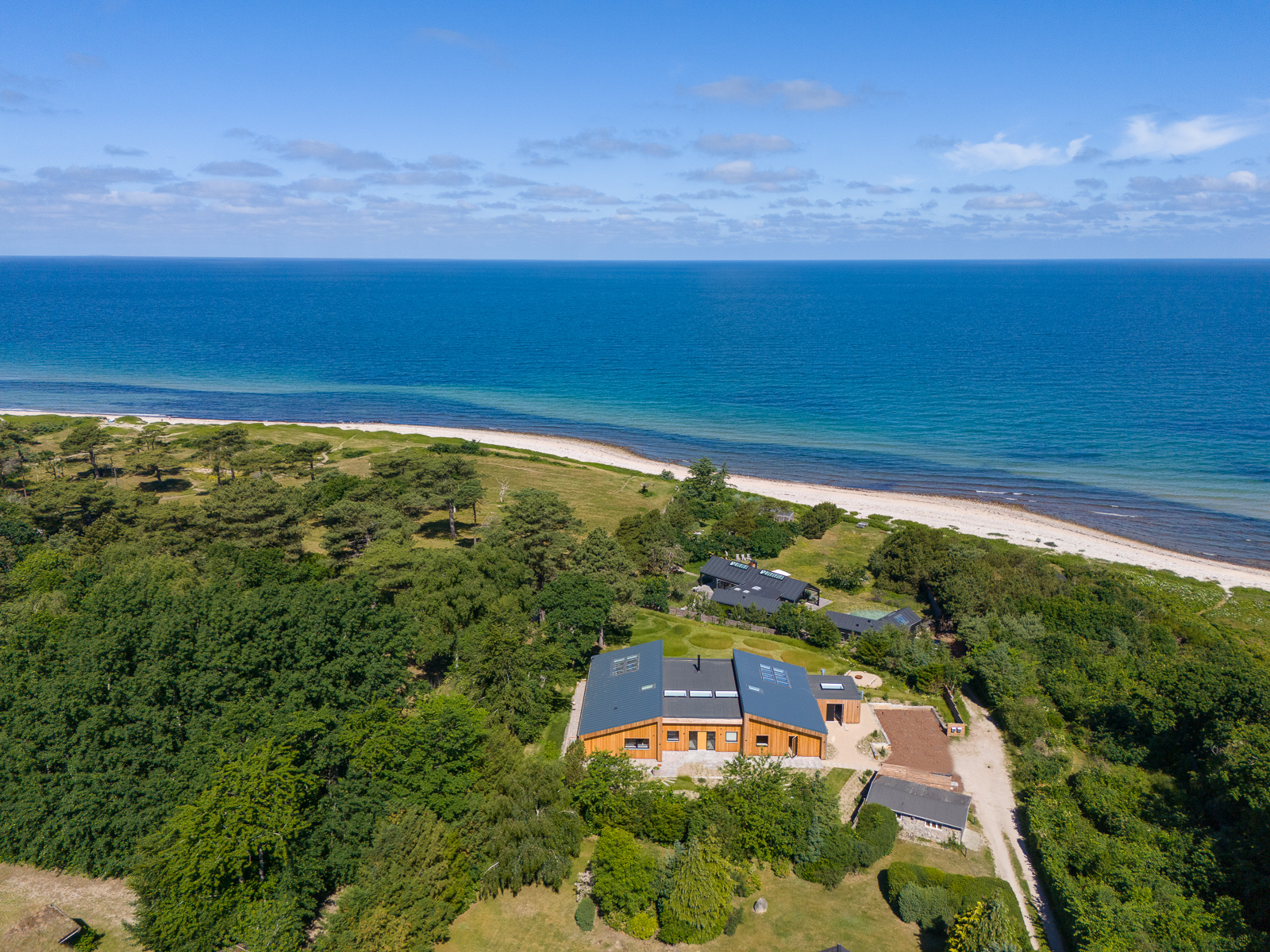
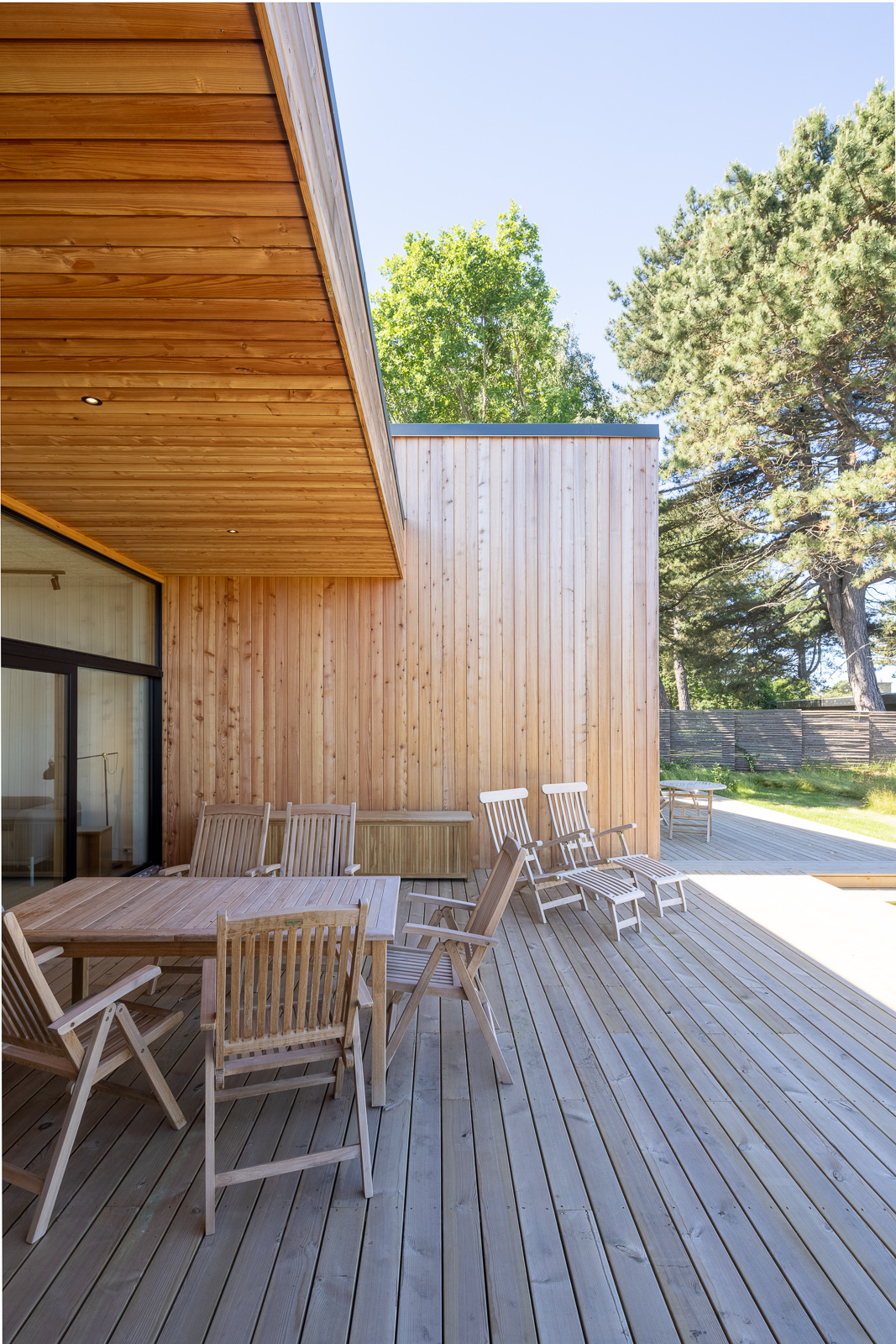
Refugiet Rævehaugen is located just outside Rågeleje in North Zealand and consists of two spacious studios overlooking Hesselø Bugt. The residency is designed by STREG Arkitekter.
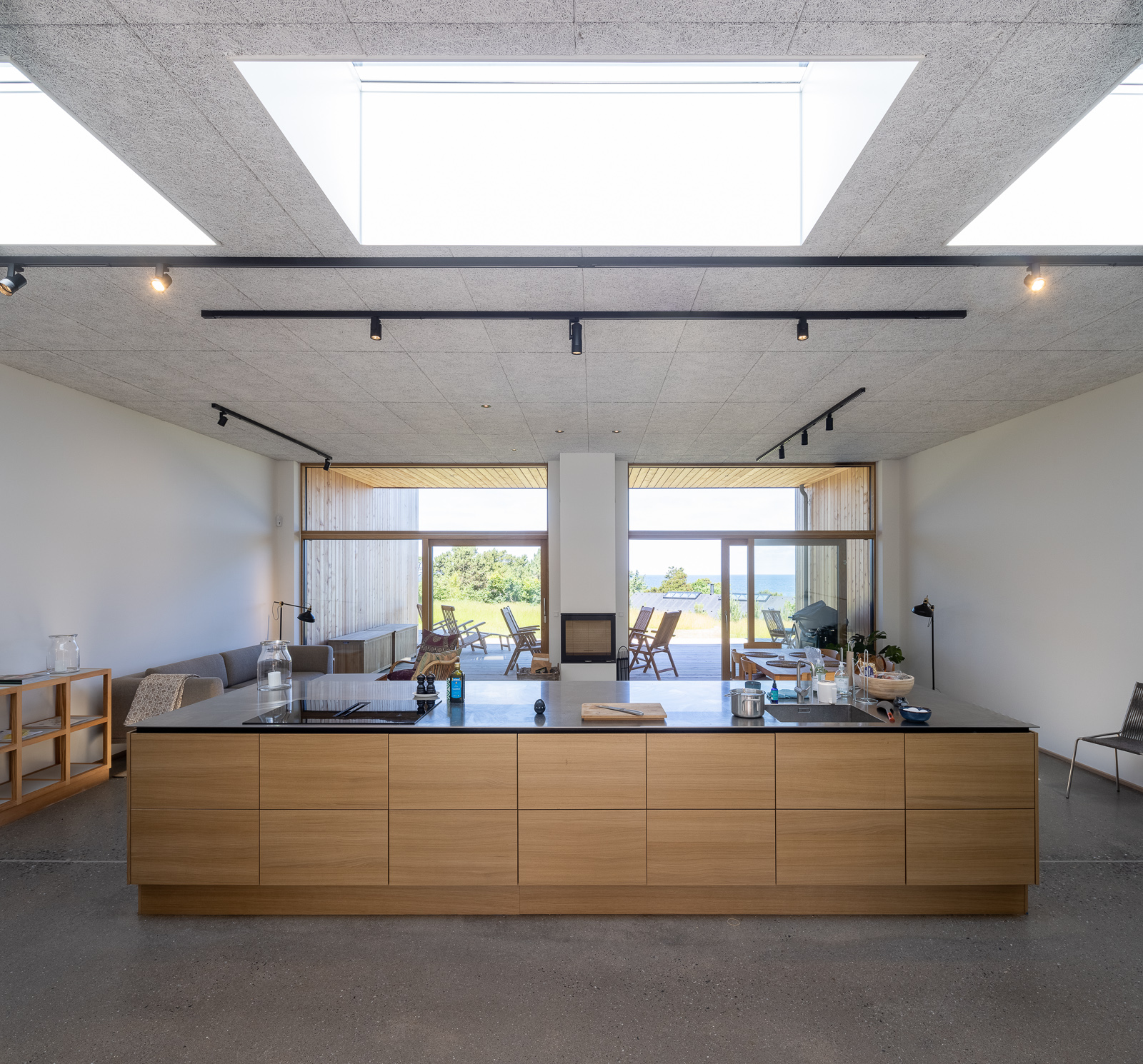
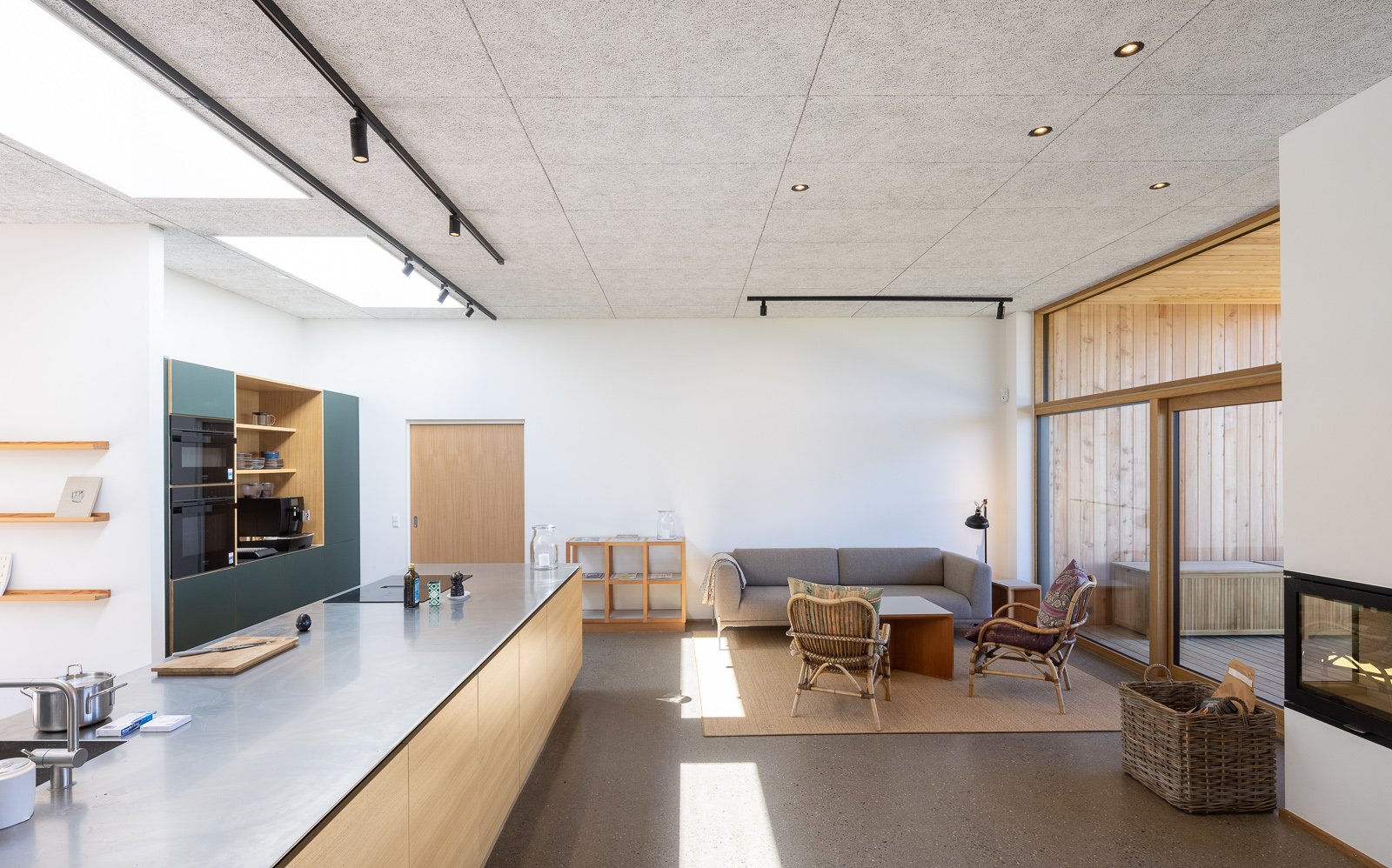
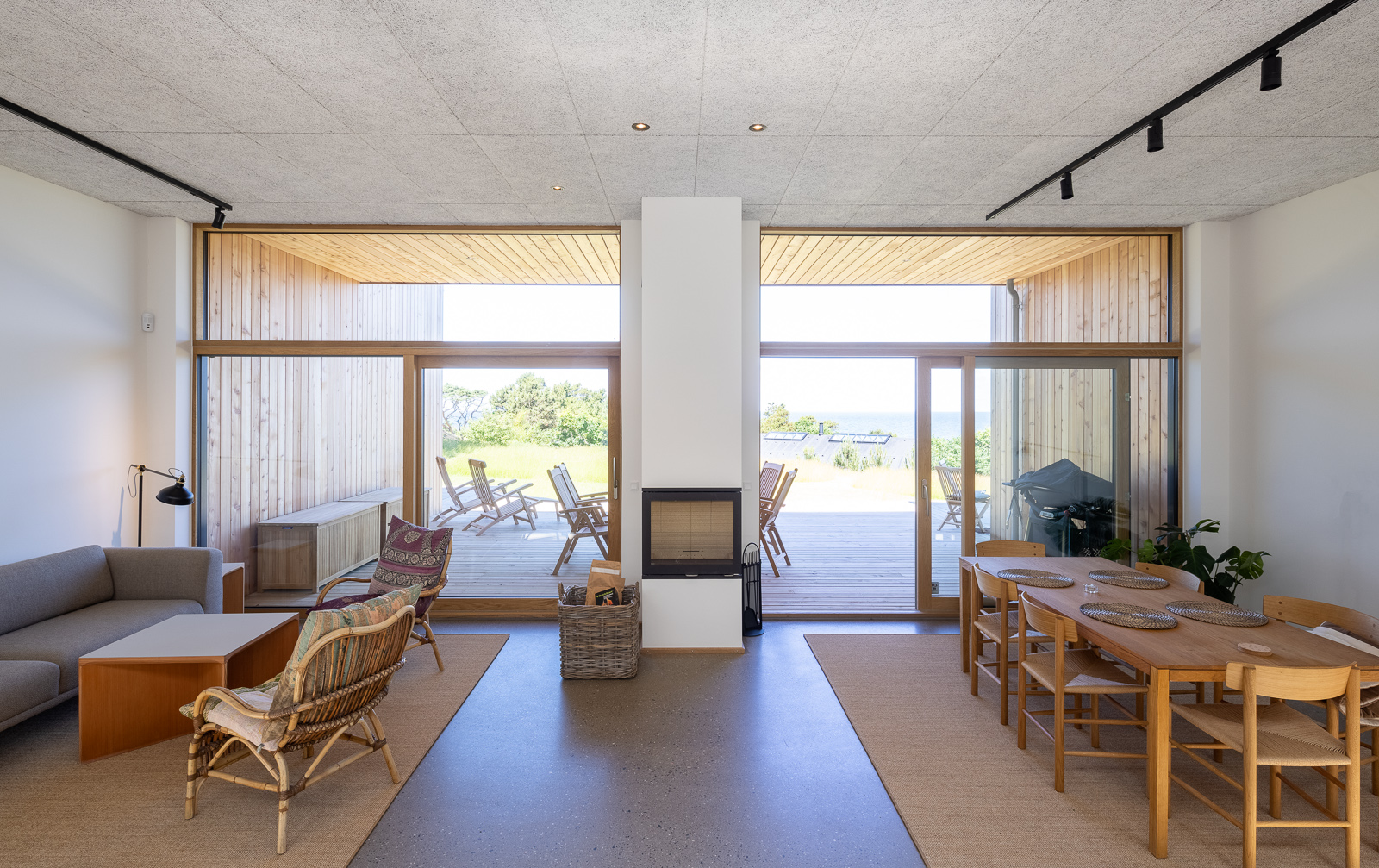
Refugiet Rævehaugen was designed by the architectural studio STREG Arkitekter. At the heart of the residency is the large, shared living space, with an open kitchen and living room where residents can gather around the fireplace, as well as a dining table for shared meals. The communal area is shared by the two artists staying at the residency at the same time and provides direct access to the terrace and garden.
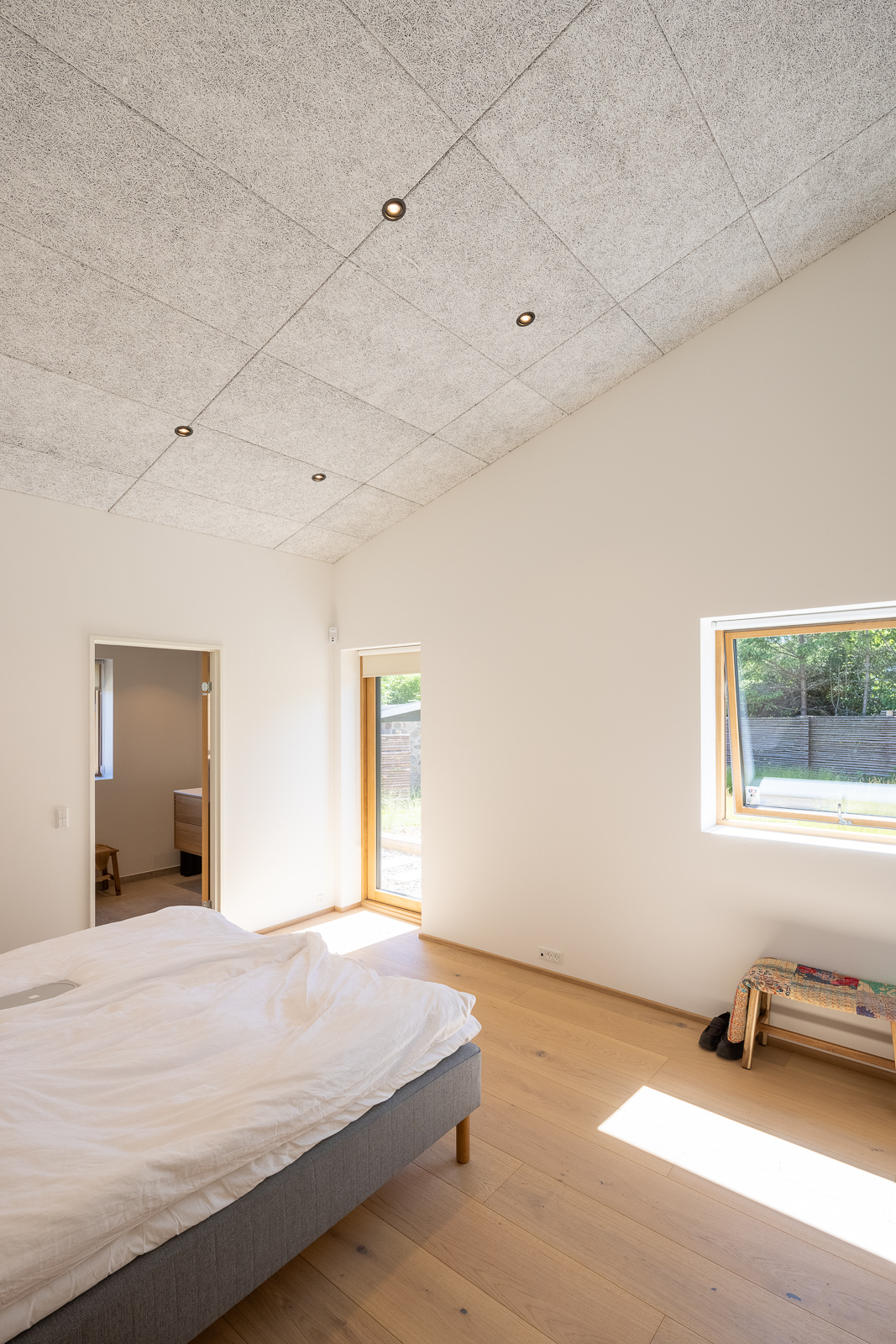
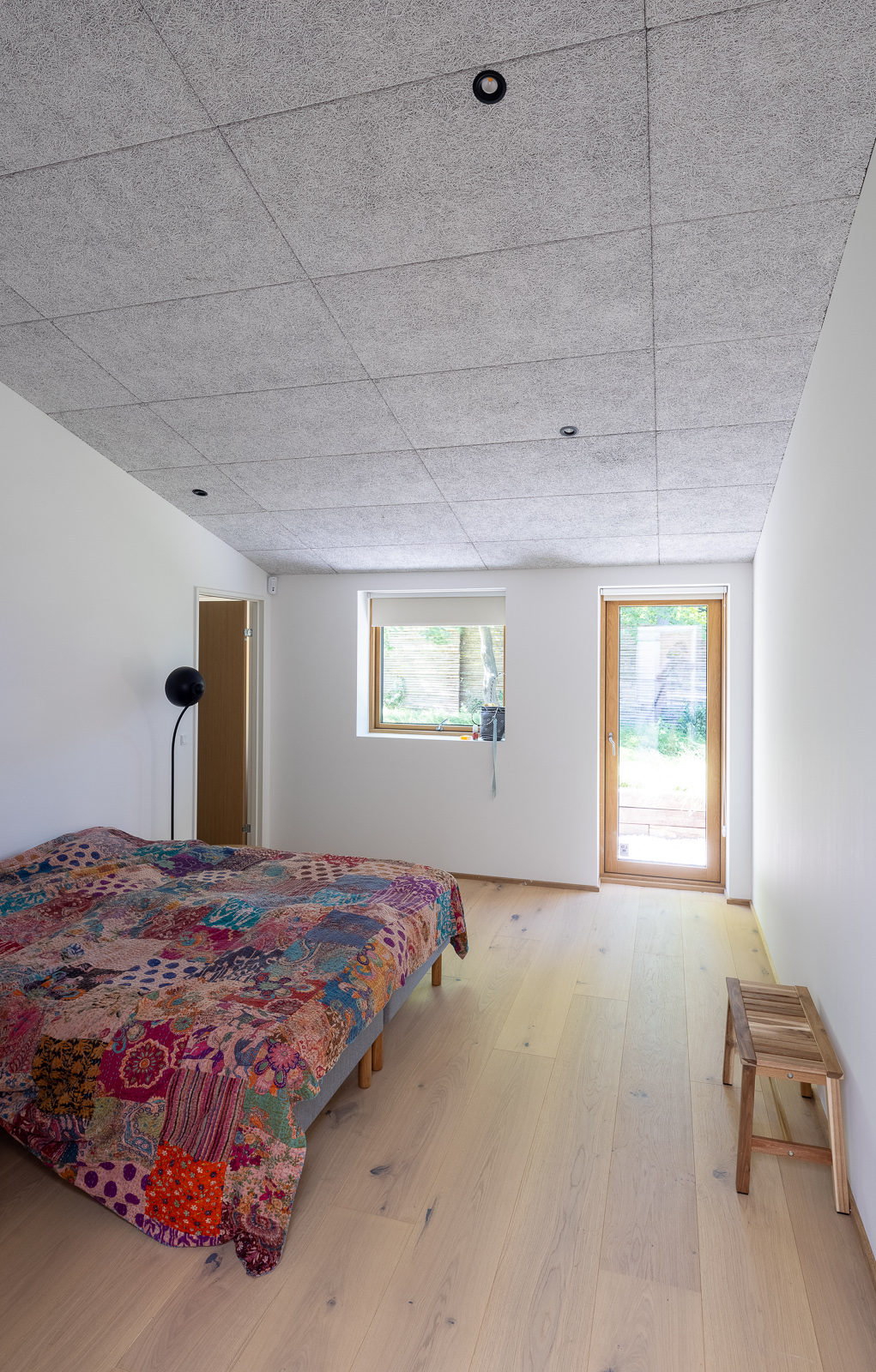
The long terrace runs along the rear of the building, giving both studios direct access to the outdoors. Each studio also has its own bedroom and bathroom. The residency therefore offers opportunities both for community and for privacy, allowing artists to retreat and concentrate on their work during their stay.
The residency also has a shared laundry room with a washing machine and tumble dryer, as well as two electric bicycles, which are available for use throughout the stay.
Artist's studio
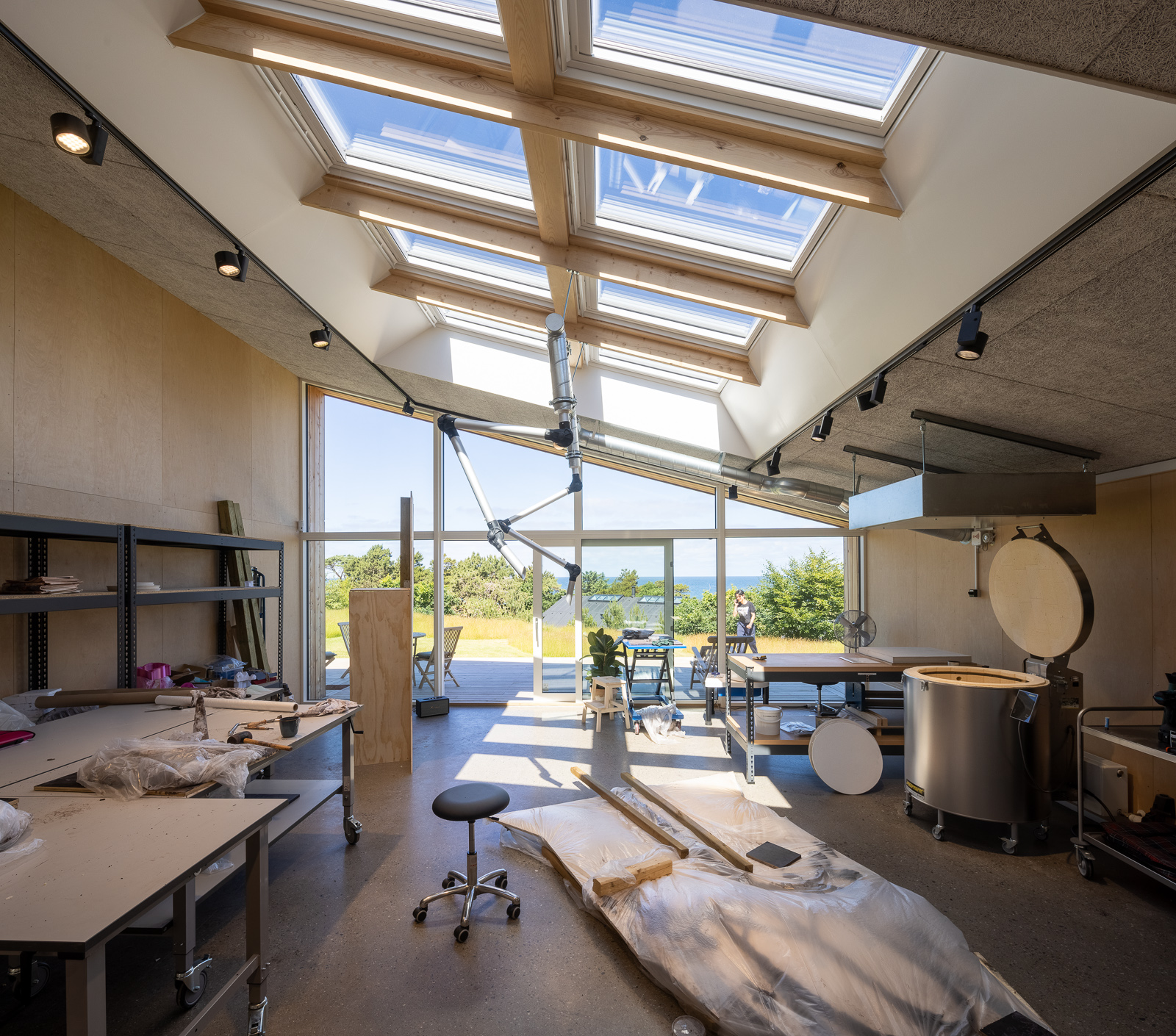
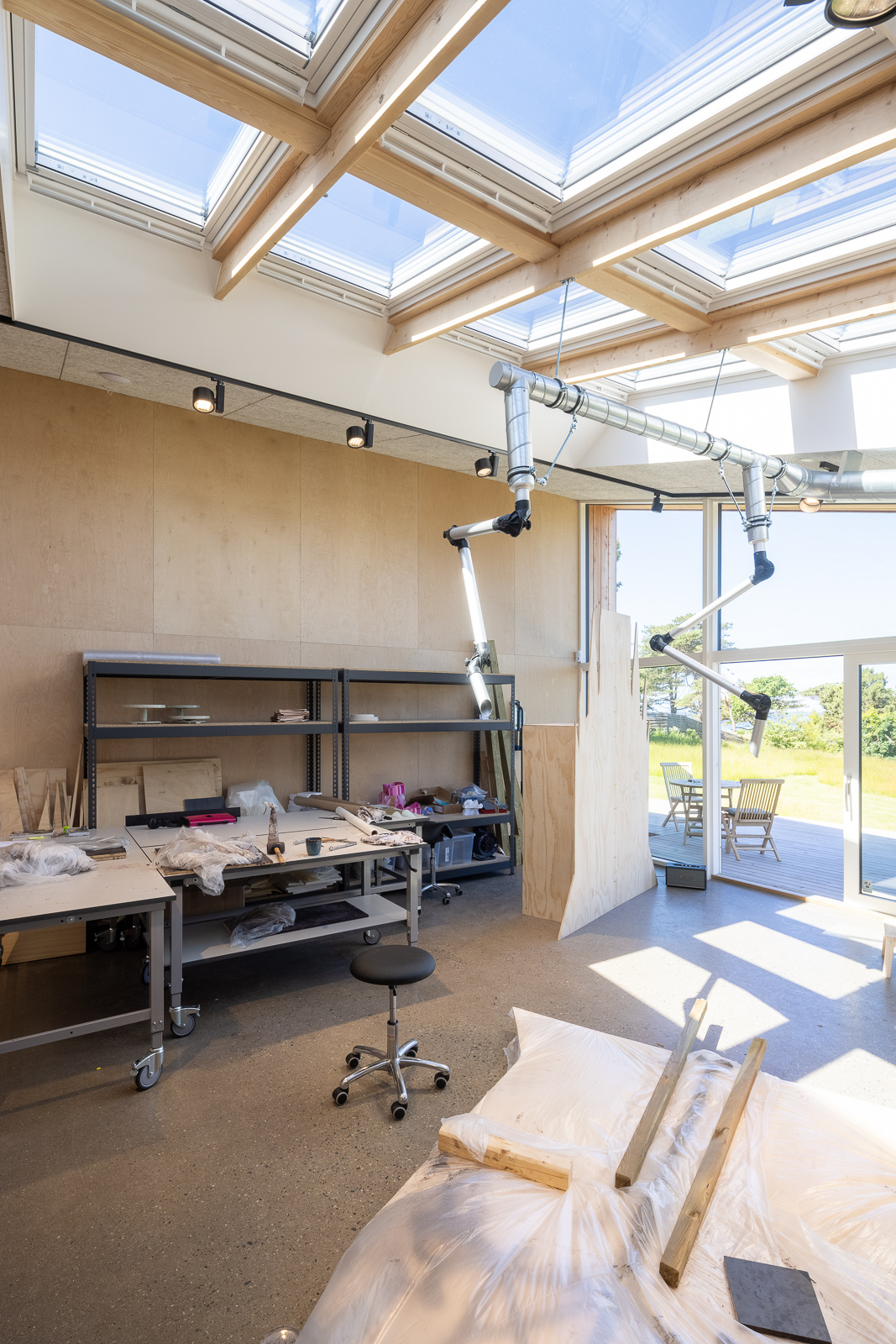
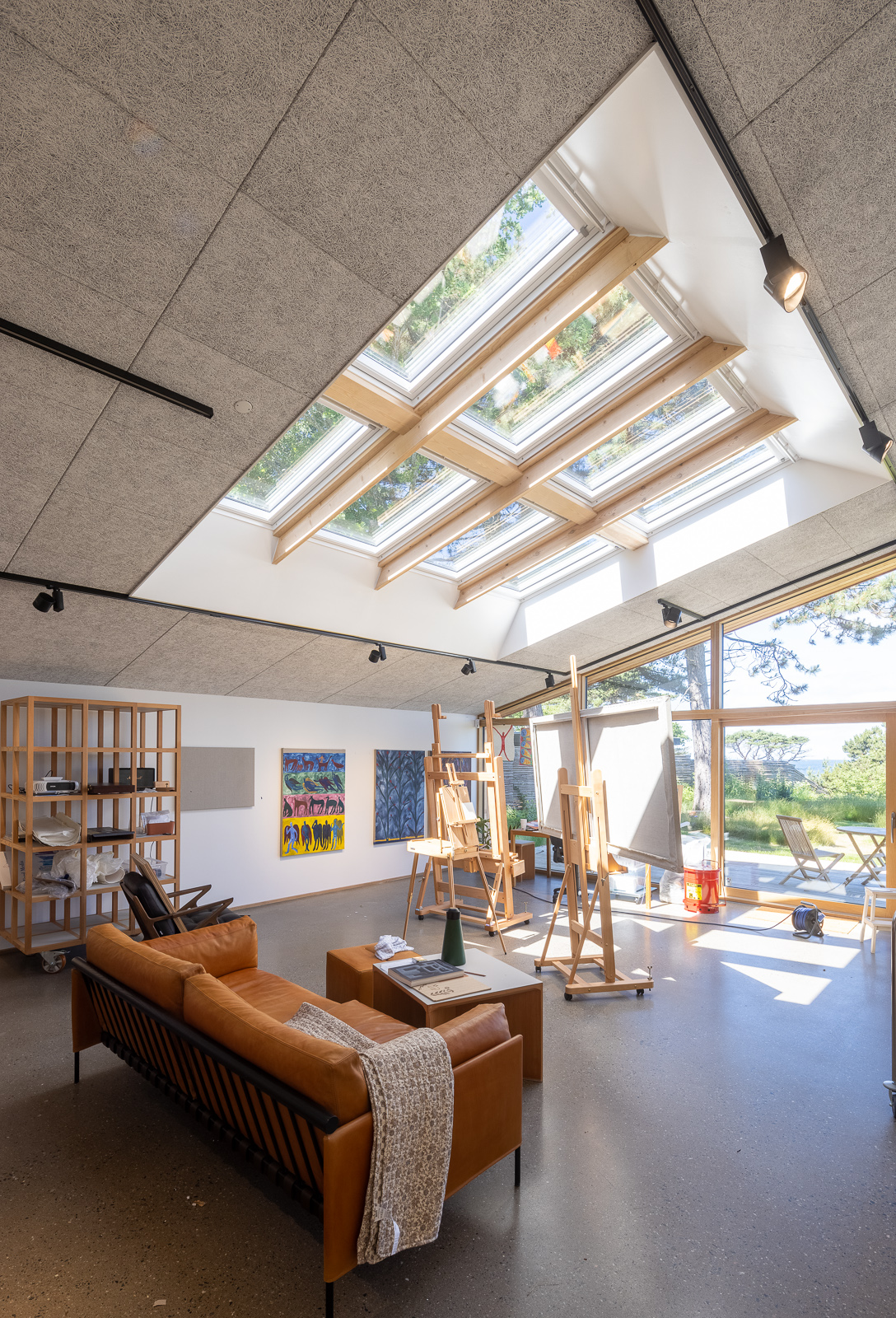
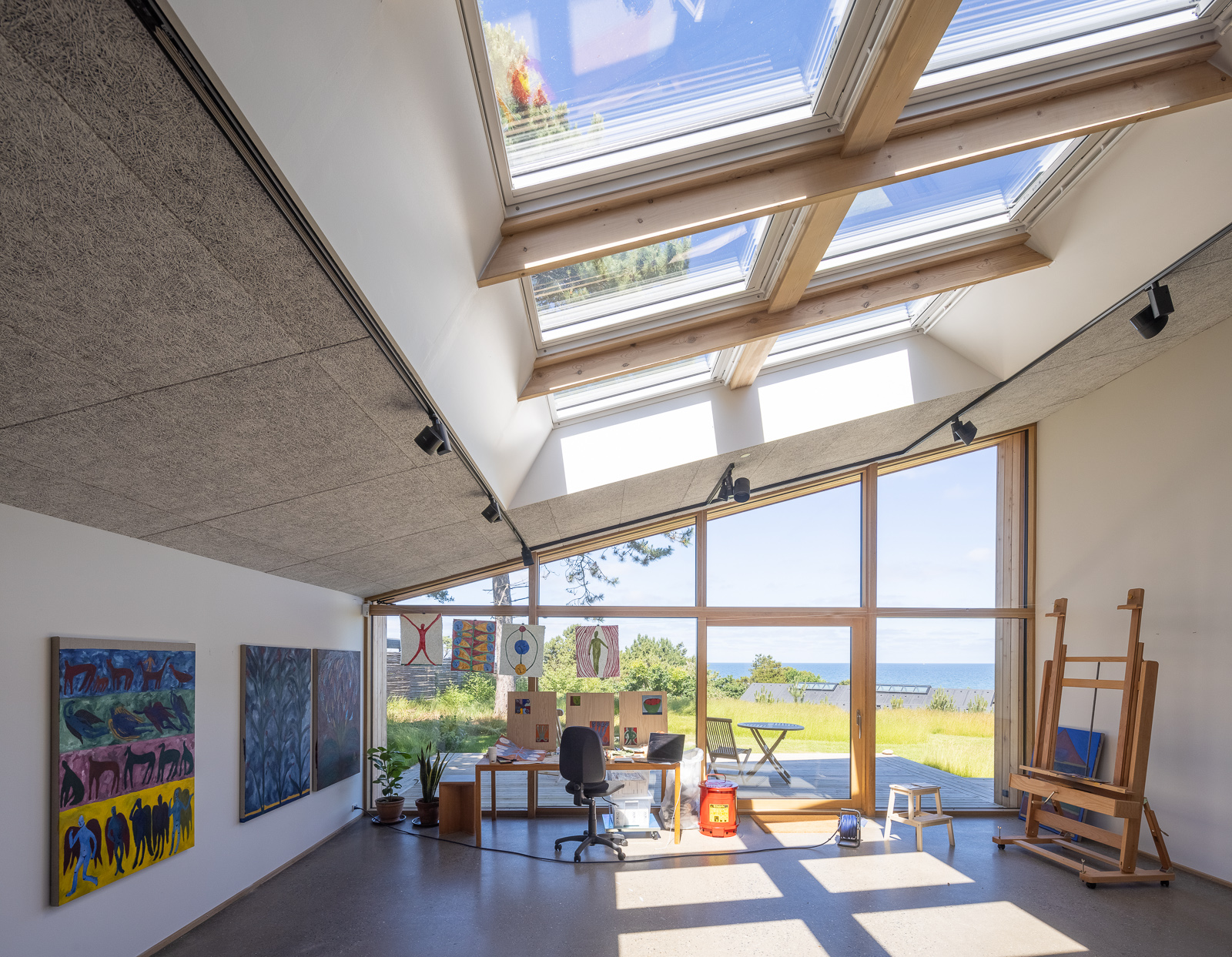
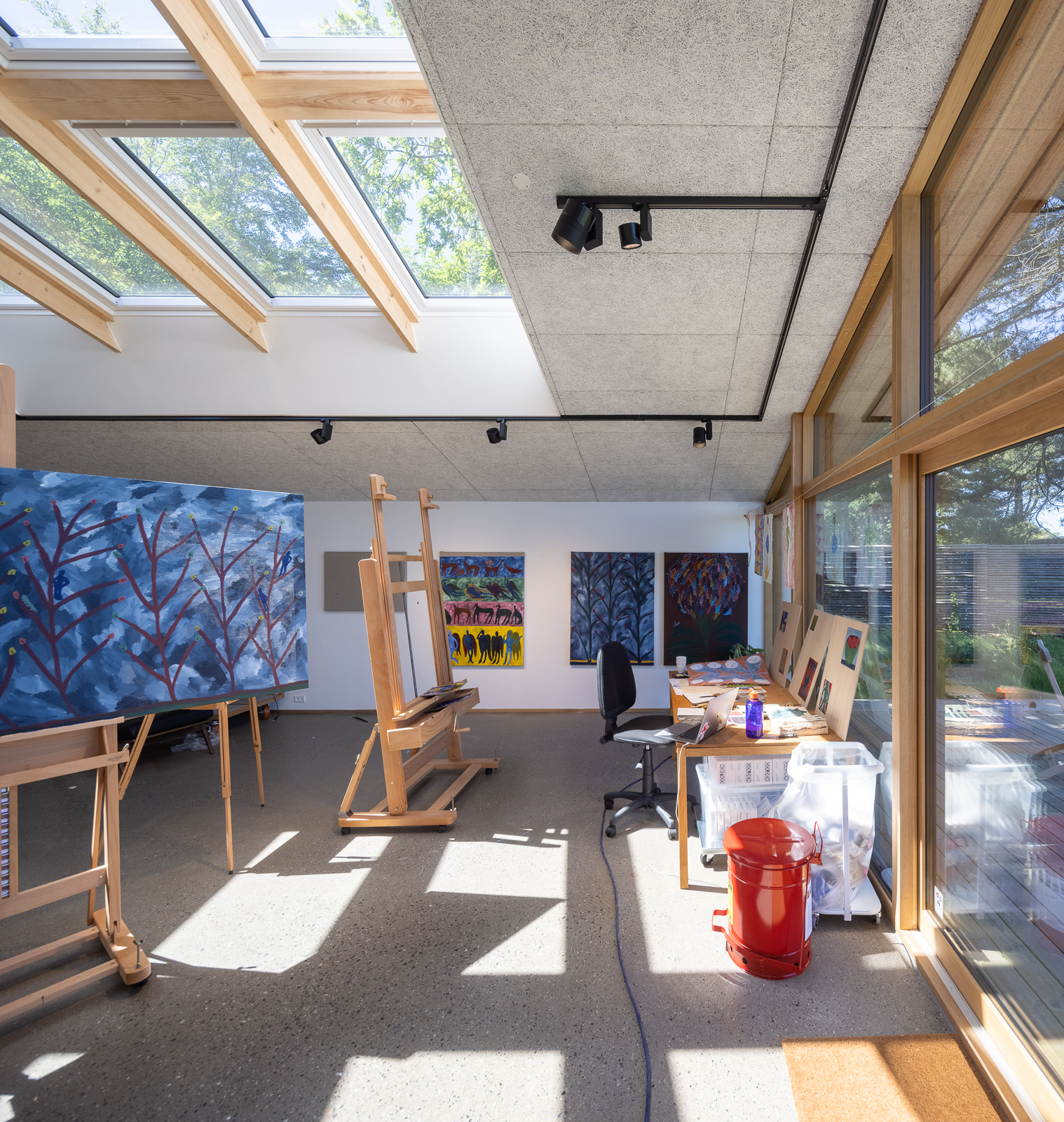
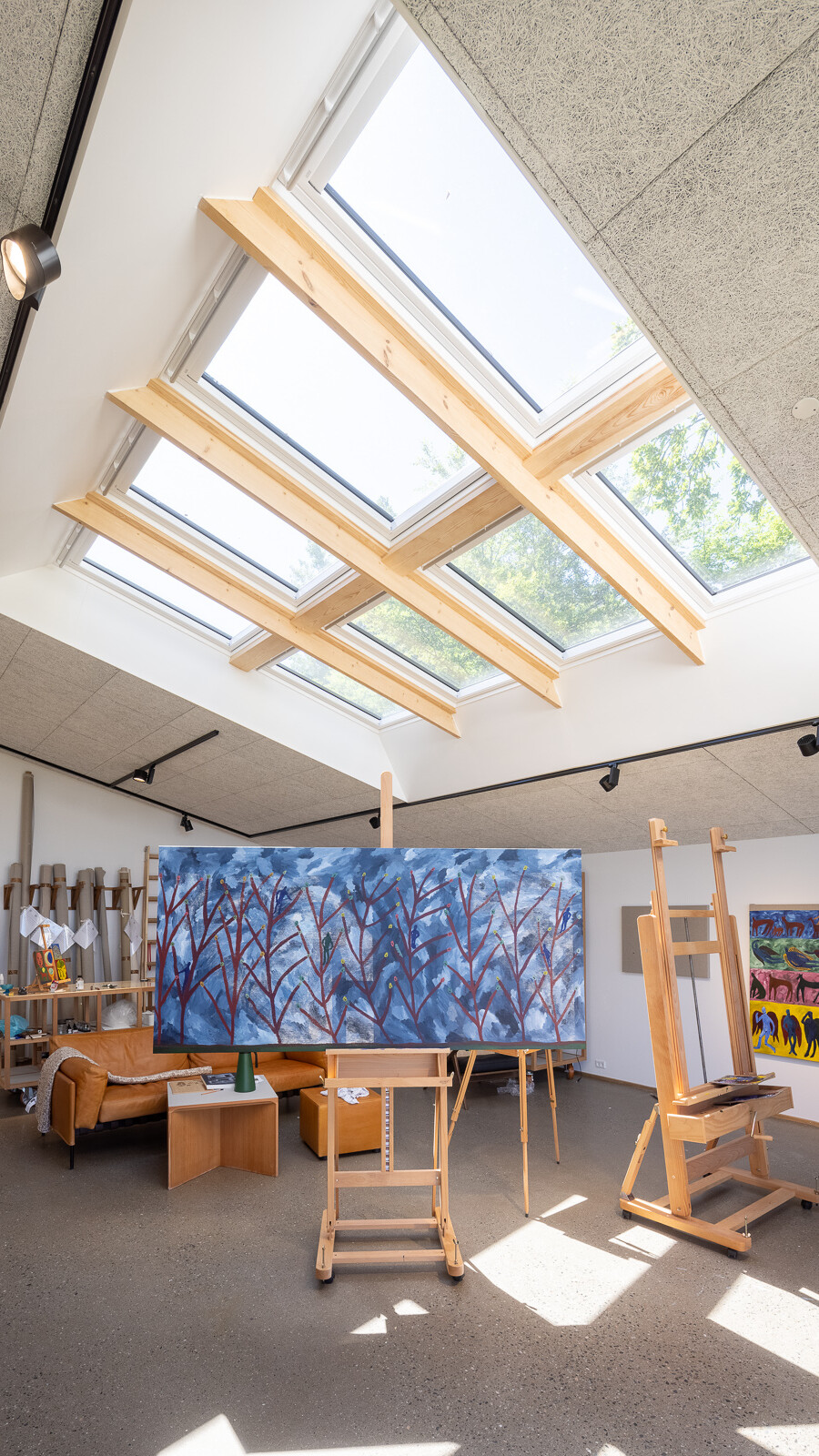
The residency’s bright and spacious artist’s studio has been designed to accommodate artistic work in both small and large formats. The high ceiling and large skylights allow daylight to flood the space, while electric blinds make it possible to regulate the light as needed. The studio has direct access to the long terrace, which runs along the rear of the building and provides an opportunity to take the work outdoors. From here, the coast is just a short distance away.
The studio is equipped with a range of basic materials and tools, including easels in various sizes and a foldable plein-air easel that can easily be taken into the landscape. The shelves contain tools, staples, a hammer, craft knives and scissors, among other things. A projector is also available and can be connected via AirPlay or HDMI.
For more experimental processes, the studio is equipped with a hot plate and pots for, for example, heating wax and rabbit-skin glue. Upon arrival, residents receive a manual with guidelines for the use of the residency’s materials and facilities. A mobile worktable makes it easy to move materials and tools around the studio, while the studio walls provide the possibility of mounting and working directly on larger works.
The long terrace runs along the rear of the building, giving both studios direct access to the outdoors. Each studio also has its own bedroom and bathroom. The residency therefore offers opportunities both for community and for privacy, allowing artists to retreat and concentrate on their work during their stay.
The residency also has a shared laundry room with a washing machine and tumble dryer, as well as two electric bicycles, which are available for use throughout the stay.
Ceramics studio
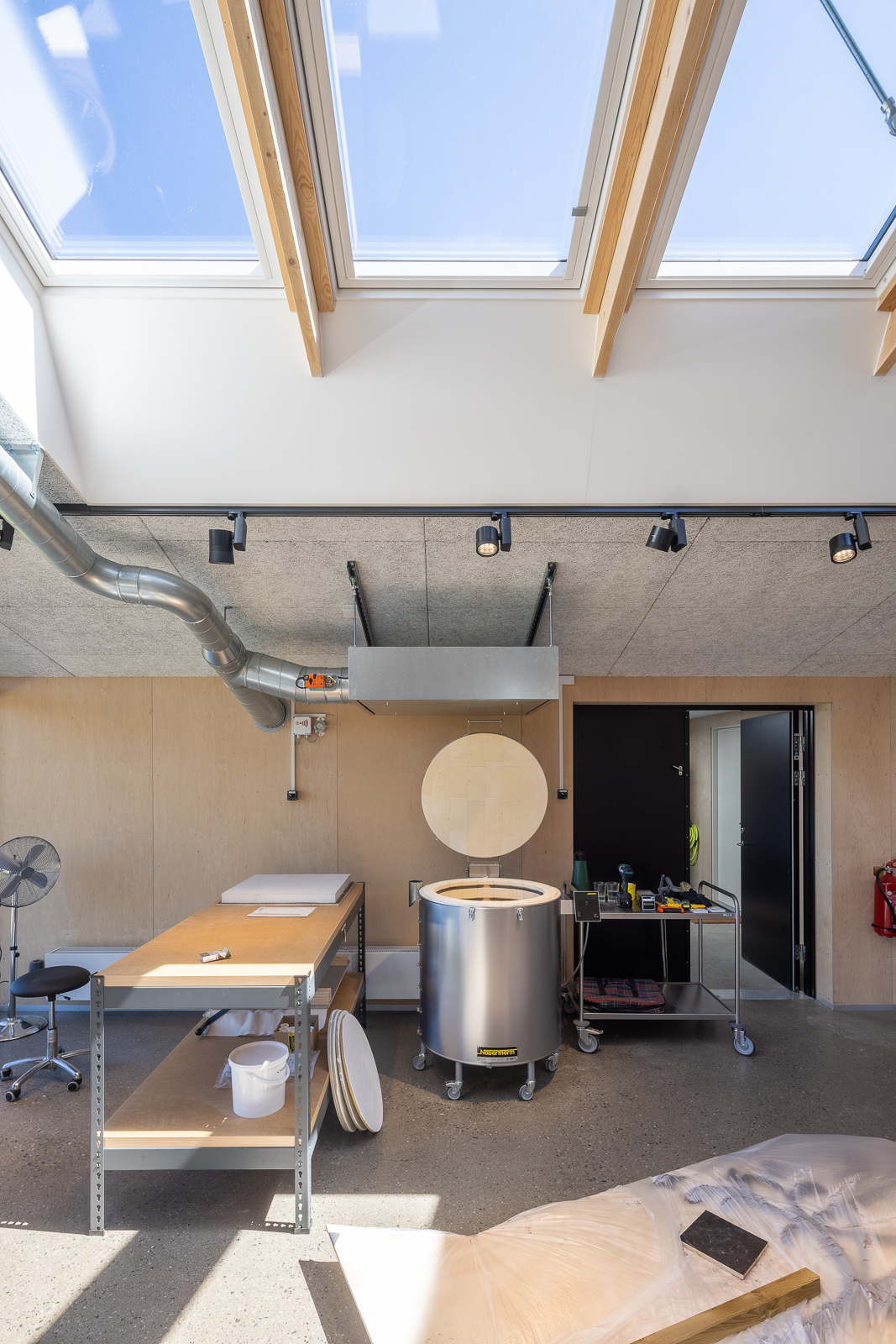
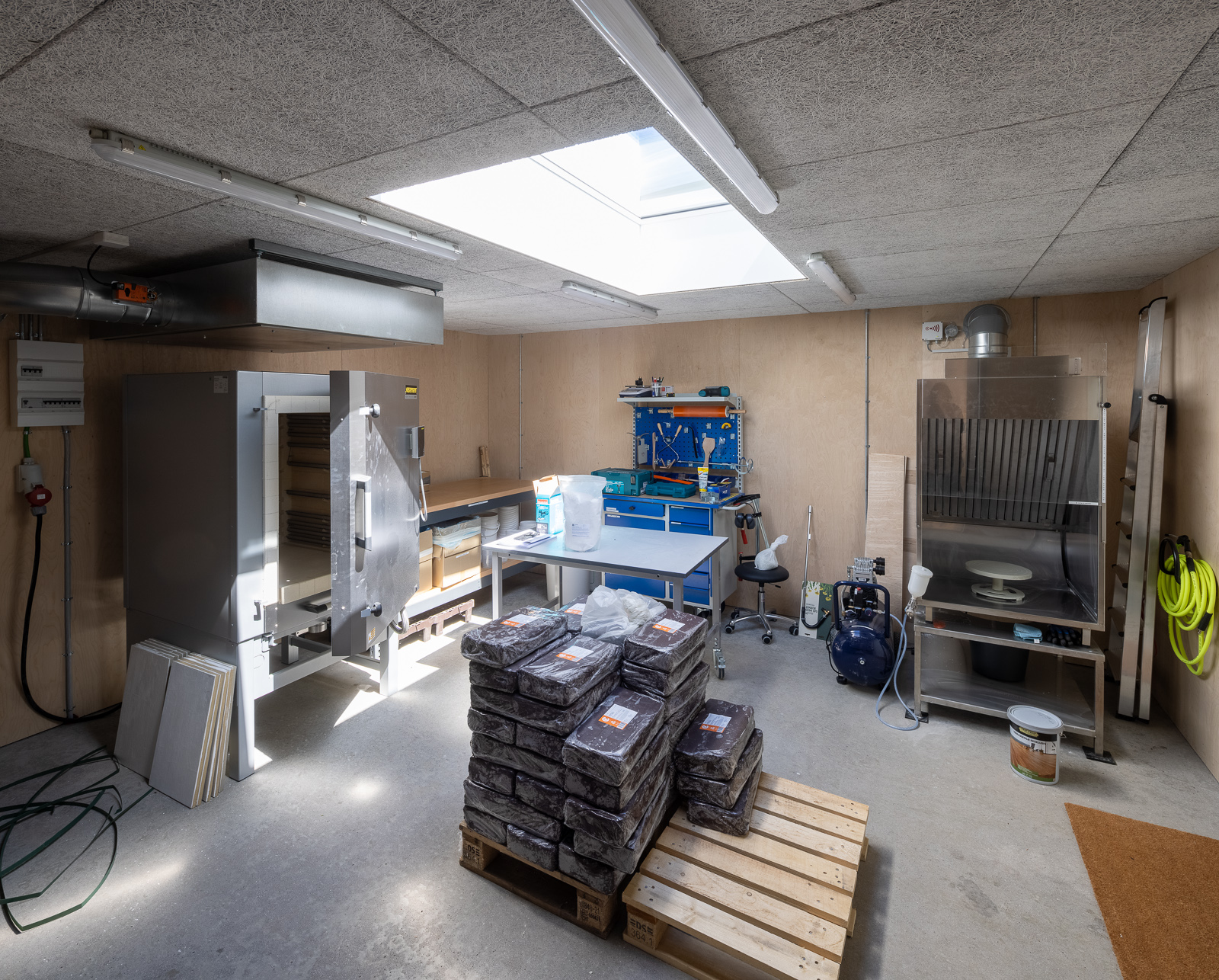
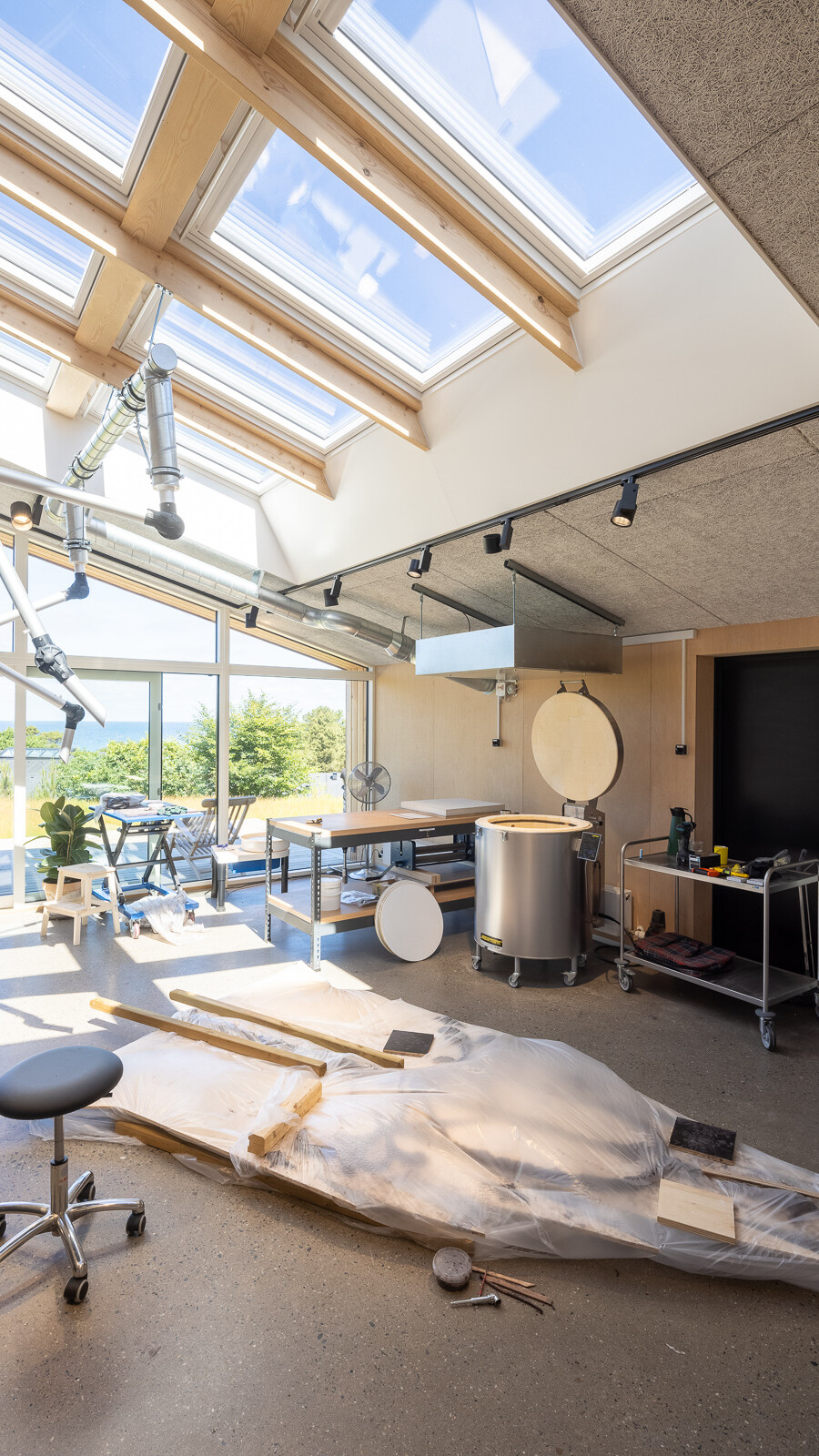
The ceramics studio is set up as a professional and flexible workspace, accommodating both experimentation and larger-scale ceramic processes. The facilities are designed to support the various stages of the work, from forming and drying to glazing and firing. The layout focuses on creating a natural and flexible workflow between the different work areas. A combination of stationary and mobile equipment allows the space to be adapted to each artist’s individual process and needs.
The studio is equipped with a pottery wheel, worktables and shelving for storage, as well as a drying table with space for both works and kiln shelves. Two kilns allow for different processes: a chamber kiln serves as the studio’s main kiln, while a smaller top-loading kiln can be used for smaller projects and glaze tests. The adjacent glazing room also contains a spray booth for glazing.
The studio has direct access to the terrace, providing an opportunity to take a break outdoors during the working day.
Great emphasis has been placed on safety, and the necessary emergency equipment is strategically located and easily accessible throughout the studio. The residency’s facilities are intended for artists with experience in ceramic processes, and users are therefore expected to be familiar with working in a professional ceramics studio. In the event of an urgent problem, the person responsible for the studio facilities at the residency can be contacted.
The area
North Zealand is home to a rich and diverse art and cultural scene. The region is home to internationally renowned art institutions such as the Louisiana Museum of Modern Art in Humlebæk, as well as smaller, site-specific art milieus such as Munkeruphus near Dronningmølle and Rudolph Tegner’s Museum & Statue Park in the distinctive landscape of Ruslands Bakker. Other cultural destinations include Nivaagaard’s Collection, as well as a range of historic cultural institutions, castles and local art initiatives.
With the Kattegat Sea as its nearest neighbour and the scenic North Zealand coastline as its setting, the area offers a distinctive atmosphere for artistic immersion and concentration. Through residencies at Refugiet Rævehaugen, Ole Staxen Foundation seeks to provide artists with favourable conditions for developing ideas, experimenting and creating new work in an area that, particularly during the summer months, is characterised by an active art and cultural scene, with music, craft markets and other initiatives driven by local creative communities.
Refugiet Rævehaugen is approximately a one-hour drive from Copenhagen and is well connected to the region’s art and cultural institutions by public transport and bicycle.
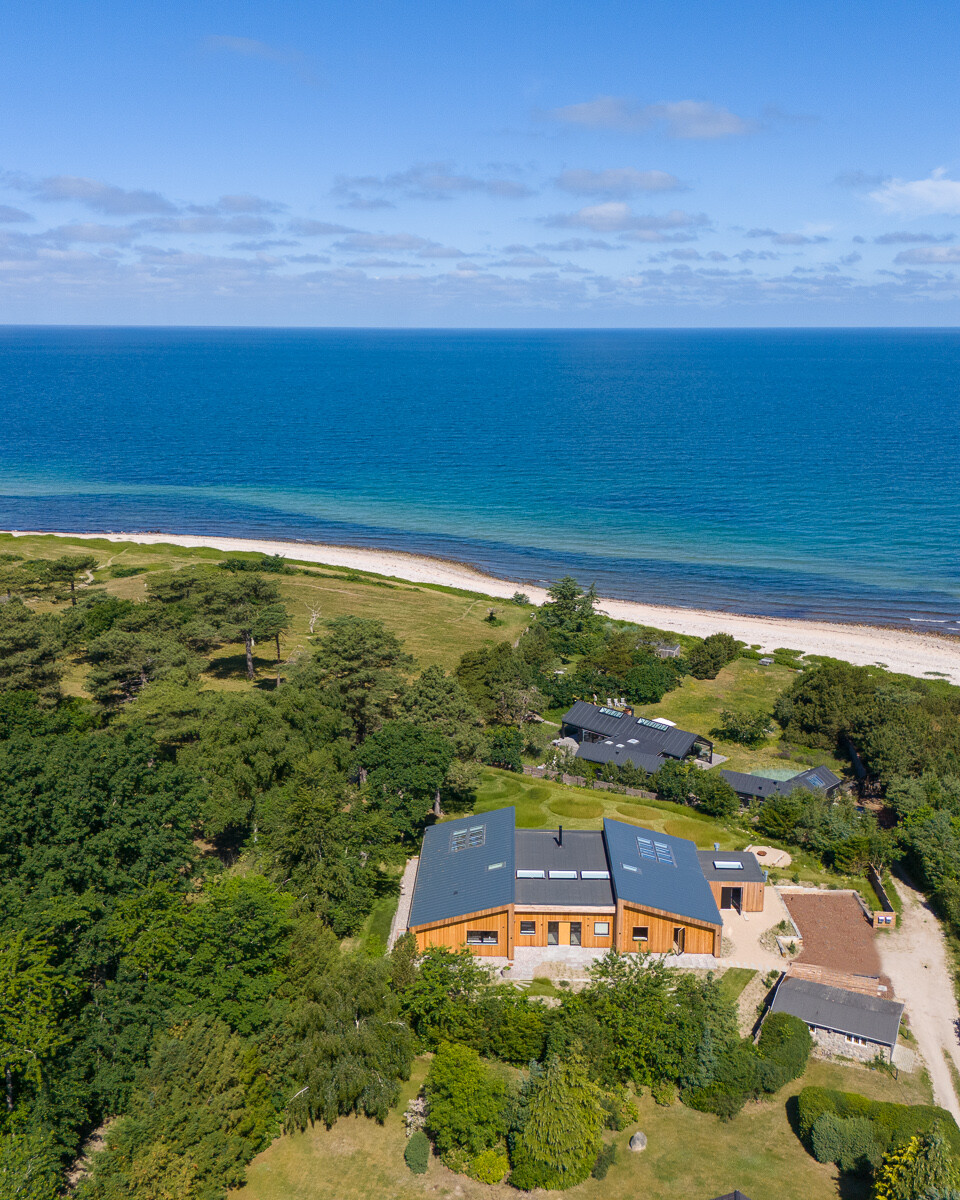
Refugiet Rævehaugen
Images by Torben Eskerod